
The Things We Control
What looks like obsession, avoidance, or stubbornness may simply be someone's way of surviving - Communist cookies recipe

“If you think that life does not follow patterns, think again.
If you think you will not react in similar ways to similar stresses, think again.
If you think everyone responds to life’s challenges in the same way, think again.
If you want to lecture others about resilience, or what they should do, stop.
If you want to blame others for not reacting quickly to a message without first wondering why, stop.
It is not about you. It is about me / or the person in front of you and how much I /he/ she carry(s) in my/their life, or how much I/they happened to be carrying at that particular moment in time.”
I was talking to a client the other day and together we made a list of the things she often hears from the people around her. They are usually meant to comfort, show concern, but somehow they have the opposite effect.
As we talked, we found ourselves returning to the same idea over and over again. It eventually became a series of simple sentences:
If you think... think again.
If you want to... stop.
If you need to understand ….. ask and … listen.
Perhaps some of them will resonate with you as well.
Her list looked something like this:
• Friends blaming her for not replying to messages, in a written form instead of voice notes without even asking her why.
• A therapist becoming frustrated because she could recognise the pattern but was not yet able to break free from it.
• An acquaintance unable to understand why she did not want to take part in what she insisted was a "must-do" ayahuasca experience.
• Family members criticising the way she reacted to a difficult situation at work.
• People assuming that her life should follow the same trajectory as theirs, without truly listening or being fully present.
As we talked, she realised something that I had realised some time ago.
Sometimes we do the things we do simply because they are the only things we can control.
Some women keep a spotless kitchen, spending hours cleaning every corner, taking out the cutlery and polishing it, washing every pot and pan, chasing invisible marks on the floor with the dedication of a silversmith polishing a ring before handing it to a client.
Some iron everything to perfection.
Some run for miles.
Some paint.
Some garden.
Some write.
Some swim.
Some practise yoga.
Some chase careers and organise their entire lives around achievement until it finally breaks them.
You can fill in the blanks.
For some, these are simply hobbies, distractions, ways to pass the time, loose weight, or follow the latest trend because Cousin Betty says it is the answer.
For some, they are behaviours they witnessed in childhood, watching family members cope with life in the only ways they knew how. Later on, they simply began to imitate them.
For others, they are tried and tested survival strategies, habits built over years of navigating uncertainty and pain.
But for others still, these things are anchors.
They are the equivalent of the mast to which Ulysses had himself tied before sailing past the Sirens. He knew his own mind would betray him, so he chose an anchor that would hold him when temptation and chaos arrived.
They keep them grounded. They keep them alive.
They create a sense of control when everything else is shaking like a house during an earthquake.
Life is rarely linear, and judging others through the lens of our own experience is one of the quiet ways we create misery for the people around us.
I have experienced it in my own life.
I see it when I talk to friends.
And I encounter it again and again in my work with clients.
Perhaps the kindest thing we can do is to stop asking, “Why are you like this?” and start asking, “What are you carrying that I cannot see?”
When I look back at my mother's life, I can see clearly that cleaning, ironing everything — even the bed sheets — and baking cakes every Sunday to take to the office on Monday, something many women did in those days, were her way of anchoring herself, of finding steadiness and creating a sense of control in a life she hardly understood, in a country she did not quite belonged to.
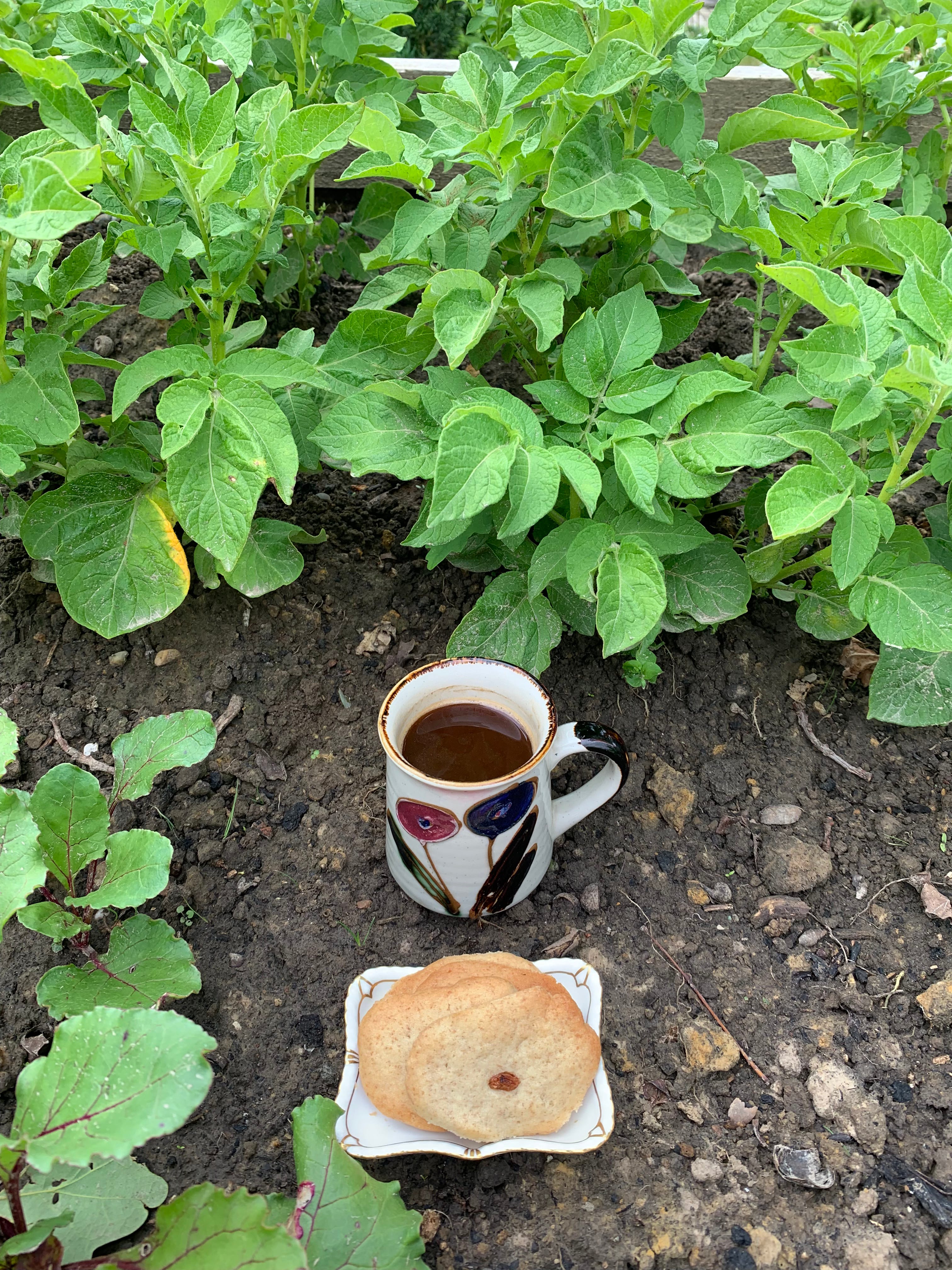
The other day I came across a recipe for very simple cookies, something that was really popular during the communist years, and a wave of nostalgia came over me.
I made the cookies.
I remember eating the dough with such pleasure when I was a child, enjoying its sweet, soft taste before the biscuits even made it into the oven. I did exactly the same this time, and I realised that I still love it.
The shapes are not as perfect as my mother’s, as my patience is not quite the same, but the taste is wonderful. And I can assure you that if I was able to make them, you will be able to make them too.
Here is the recipe.
FURSECURI SIMPLE (simple cookies)
Ingredients
200 g butter, soft
100 g sugar
1 egg
300 g flour
1 teaspoon vanilla essence
Optional: a pinch of salt
Method
Heat the oven to 180°C and line a baking tray with baking paper.
Put the soft butter and sugar in a bowl. Mix well until creamy.
Add the egg and vanilla essence. Mix again until smooth.
Add the flour gradually. Mix until you get a soft dough. Do not overwork it.
If the dough feels too soft, place it in the fridge for 20–30 minutes.
Take small pieces of dough and shape them into balls, or roll the dough and cut shapes with a cutter.
Place them on the tray, leaving a little space between them. Add some raisins, bits of walnuts.
Bake for 10–12 minutes, until lightly golden at the edges.
Leave them on the tray for 5 minutes, then move them to a plate or rack.
Dust with icing sugar, if you like.
They will be tender and buttery, not very sweet — perfect with tea or coffee.
Until next time, be well!
STRAIGHT TALK RECOMMENDS
Documentary - Radical Neighbouring – The Farm Where Nothing is for Sale - one of the most exciting things about humans is the creativity, innovation, capacity to remember. We don’t need to reinvent the wheel, we need to remember and adapt.
Book - For your own good by Alice Miller - The roots of violence in child rearing - If only people realised that the way they raise their children has a profound impact on the adults those children eventually become.
It is striking how a traumatic childhood can lead to years, sometimes decades, of trying to understand, heal, and rebuild through therapy.
This book may help you find some answers if your own childhood left invisible wounds. And if you are a parent, it may help you become more aware of the lasting effect that small everyday actions can have, allowing you to make fewer mistakes and create a safer emotional world for your child.
Straight talk archives -
When “Strong” Becomes a Cage
·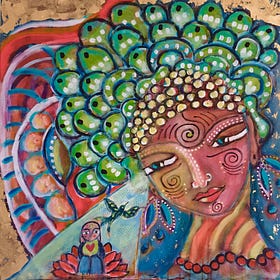
The lonely child - see more paintings by Corina Stupu Thomas click here

If these reflections resonate with you — the stories about memory, resilience, creativity, and making sense of the world — you can support my work by becoming a paid subscriber, supporting me on Ko-fi, or exploring my art and workbooks. Your support helps me continue writing, drawing, and creating the reflections and creative tools that many readers say bring them calm, perspective, and sometimes simply the feeling that they are not alone. In difficult times, every reader and every supporter truly matters.
This really resonated with me. So much of what you wrote matches my own lived experience, especially how we reach for small, steadying rituals when everything else feels out of control. Your point about the danger of judging others through our own lens is so important, and I’ve felt both sides of that in my own life. Thank you for putting these truths into words with such clarity and kindness.
And the cookie recipe is such a bonus! It brought a wave of nostalgia for me as well. I can’t wait to try it. Sometimes the simplest things really do anchor us. Thank you for sharing both your wisdom and a little sweetness. 🫶