
What Comes Next?
Reflections on curiosity, old rituals, and a Sunday morning in St Leonards.

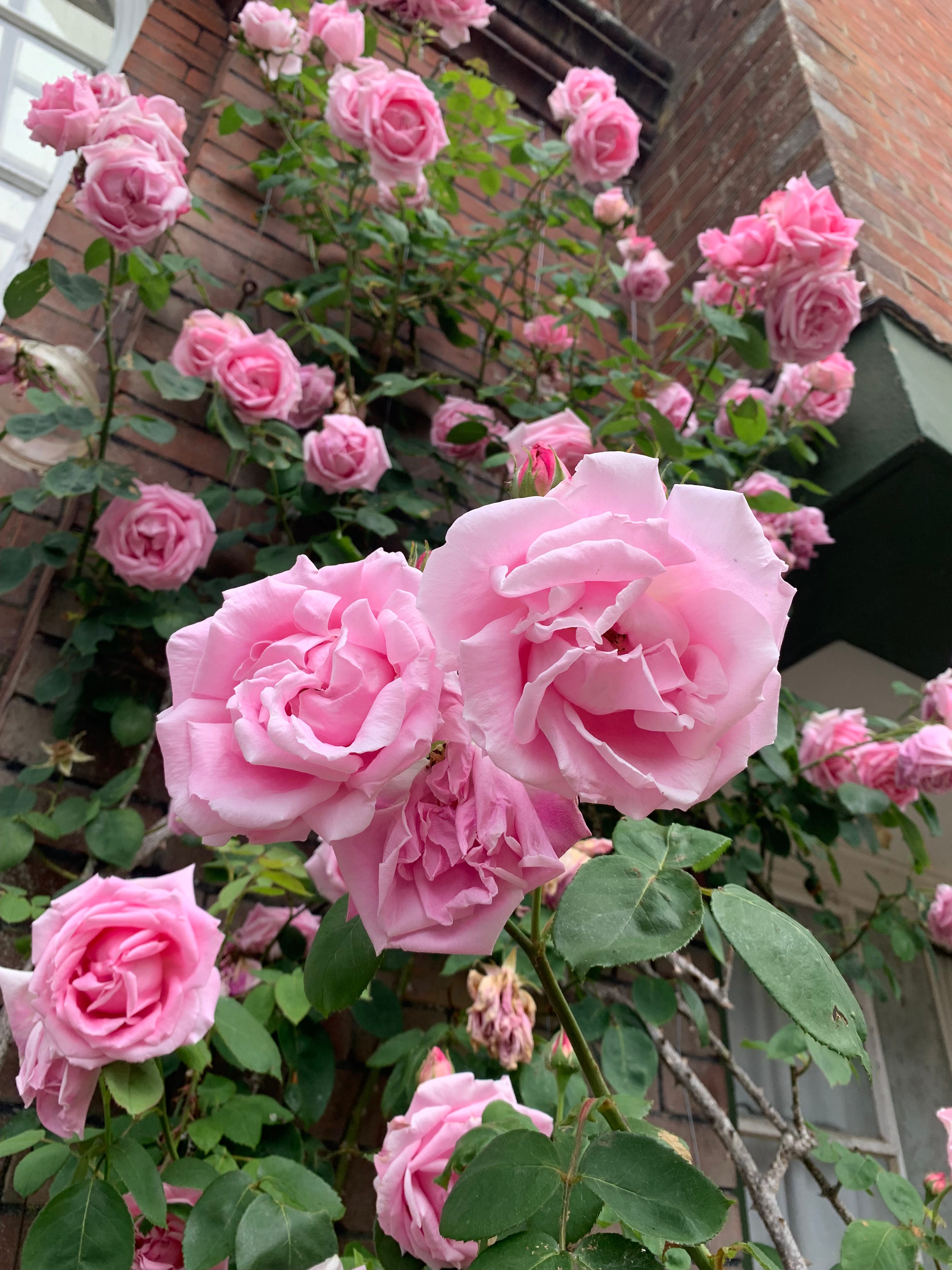
It is early in the morning, and the heat trapped between the walls of his small house is already oppressive. Some of the windows cannot be opened, making the entire experience even harder to bear.
Summer in England is quite an experience. Most of the time, it arrives in fleeting moments — you blink, and it is gone. But some years, it returns with a vengeance, and the heavens pour down so much heat that we can hardly bear it. One cannot help but wonder whether this is nature’s way of balancing the books for those years when autumn seemed to whisper into summer long before its time.
The first cup of tea is almost gone, and I cannot help but ask myself why the first thing I do every morning is put the kettle on, pick a teabag, open the fridge, take out the milk, and begin the almost mindless ritual of making tea.
Do I actually like this tea? I am not really sure. It is a habit, a way of marking the beginning of the day.
I do not even stop to ask myself what it would be like to make a cup of linden tea instead, or to prepare a nettle infusion in the evening and enjoy it the following morning. No, the first cup is always this English tea.
We do so many things in life simply because we have seen them done before, and so we repeat them. It is like performing a ritual whose meaning has long been forgotten.
And yet, I would love to bring a little more creativity into this first cup of something in the morning. Perhaps a different herb, a different flavour, a different intention. Perhaps the day would feel different if it began with curiosity rather than habit.
Curiosity is the trait that has helped me throughout my life. Even in the toughest moments, I carried on simply because, even when I felt defeated, even when I could not see a sliver of light in the environments I lived and worked in, even when my body was saying, “I can’t cope anymore,” and my soul was screaming in pain, curiosity kept whispering:
“I wonder where the solution will come from.”
“I wonder what other books are waiting for you to read.”
“I wonder what other good experiences are still ahead of you.”
Curiosity, combined with a feeling that this journey on Earth has a purpose, has always sustained me. Perhaps that purpose is to accumulate experiences, to travel through a myriad of good, bad, and ugly moments, and to learn from them all.
Sometimes I think of myself as an explorer sent to a distant planet. My task is not to avoid the difficult terrain but to experience it fully, to observe, to learn, and one day to report back on what I found. Every joy, every disappointment, every act of kindness, every betrayal, every lesson becomes part of the story.
And so I continue, driven by the simple question that has carried me through some of the darkest times:
“What comes next?”
Curiosity Leads the Way
This is why I decided to visit the Russian Orthodox Church in St Leonards (read the first part of the blog here).
I had no idea what to expect and went with no expectations at all. I have attended various Orthodox services in Romania. Many years ago, I stayed through a handful of services from beginning to end, always with a dear friend. I visited churches and monasteries and experienced moments of intense admiration for the beautiful decorations, paintings, icons, cool interiors, and the sense of peace they offered. But that was about it.
Then, after the terrible experience involving my father (read about it here), and the way I felt betrayed by the church, I stopped going altogether. I began to question the institution even more deeply, as it seemed to me that the church had become more of a corporation than a place where people could find solace, support, and understanding.
The first time I drove down the street where the church was supposed to be, I missed it. The building is so tiny and squeezed between two houses that it is very easy to overlook, and I have to say I liked that. I liked the lack of grandeur. I liked the simplicity of the exterior—although, in some places, it looked a bit like a construction site because, yes, dear reader, this is very much a work-in-progress church.


The building once belonged to a school and dates back to the mid-1800s. It has now been transformed into an Orthodox church. You can tell what it is from the onion-shaped additions on the roof and the cross rising above them.
What I did not expect was to find that the inside of the church was also very much a work in progress. For whatever reason, this made me feel as though I was witnessing history in the making. Beautiful icons adorn some of the walls, while scaffolding is still present in other areas. I was delighted to recognise some Russian saints depicted in the icons and equally pleased to discover a special place built for the choir—a mezzanine, typical of some old Romanian churches as well. One can hear the choir but not see them, which brings a sense of mystery to the experience.
I smiled when I saw young women dressed as I had seen in films: long skirts, beautifully pressed white blouses, small white headscarves tied neatly over their hair, some embroidered with Cyrillic motifs, others made from delicate patterned fabrics. The men were dressed in impeccably ironed shirts. Wherever I looked, I saw people dressed for church, so to speak—dressed with respect not only for the divine but also for themselves.
This is how many generations approached Sunday services. It was an opportunity to take the best clothes out of the sunduk and treat the occasion as something special. Every Sunday marked a day dedicated to God, a day for prayers for a good harvest, good health, and protection, but also a day for gratitude.
I will not judge the church here. I will simply say that perhaps we have lost something that once brought solace to many people.
Humanity has always suffered from one thing or another. We instinctively feel the need to pray, to question, and to give thanks. Sometimes we address a tree, a statue, the sky, a myriad of gods and goddesses, or simply a word spoken into the silence. When we feel powerless, we instinctively reach beyond ourselves and ask for help from somewhere.
Interestingly enough, this day was All Saints’ Day according to the Russian Orthodox calendar. It was also a day when people went for spovedanie (confession) before the service.
The entire experience was new to me as an observer. It was fascinating to witness customs and habits I had never encountered before: people queuing patiently, waiting for their turn to speak briefly with Father Alexander and receive his blessing.
I was particularly moved by the way people, before approaching the priest, would turn to face the congregation, cross their hands on the chest, and bow. It reminded me very much of the Sufi dervishes before they begin their mystical dance. I have never seen this practice in Romanian Orthodox churches, so it may be a Russian tradition. I will find out in time, but for now, I will simply say that I loved it.
There was something deeply respectful and humbling about the gesture. It seemed to acknowledge not only the priest but also the community gathered together in that sacred space.
All in all, it was a wonderful experience, something I had not expected at all. I loved the singing—the tones and harmonies were very different from what I was used to hearing. I loved the service because, ha ha ha, it was not nearly as long as some of the others I have attended. I also loved that it was conducted mostly in Russian. For me, the Russian language carries no trauma, so I can simply rest in the atmosphere and energy it creates.
A space can be beautiful and yet feel cold and unwelcoming. What makes the difference? The people.
And so I must say a few words about Father Alexander and his team.
One thing I particularly appreciated was the genuine, eloquent, and educational talk given at the end of the service. For about five minutes, the congregation was addressed from the heart. For once, I was able to hear and absorb the words being spoken rather than listening to a series of mumbles, as I have often experienced elsewhere.
I had no idea that Christianity arrived in Russia in 988 - Prince Vladimir the Great adopted Christianity and initiated the Christianisation of Kievan Rus - nor did I know much about the circumstances surrounding its arrival. The talk was a brief introduction to the beginnings of Christianity in Russia, and I found it fascinating.
More importantly, it immediately told me something about the person standing before me. Here was not simply a priest repeating familiar words, but a thinker and a seeker—someone curious about history, ideas, and the wider world. Someone I wanted to know more about.
To be continued.
Until next time, be well.
If these reflections resonate with you — the stories about memory, resilience, creativity, and making sense of the world — you can support my work by becoming a paid subscriber, supporting me on Ko-fi, or exploring my art and workbooks. Your support helps me continue writing, drawing, and creating the reflections and creative tools that many readers say bring them calm, perspective, and sometimes simply the feeling that they are not alone. In difficult times, every reader and every supporter truly matters.
STRAIGHT TALK RECOMMENDS
Movie - Rasputin - I highly recommend this production. If you enable the English captions, you will learn a little about the Russia I know and love.
Is it the truth, the whole truth, and nothing but the truth? Probably not. No single documentary or tv series can claim that. But it may open your mind, challenge a few assumptions, and perhaps whet your appetite to explore further.
Russia, like any country, is far more complex, contradictory, and fascinating than the headlines often suggest.
Straight talk archives -
Naked truth - When the muse decides - about writing and Tolstoy chapter 18
·
"Write only if you cannot live without writing. Write only what you alone can write." — Leo Tolstoy
